

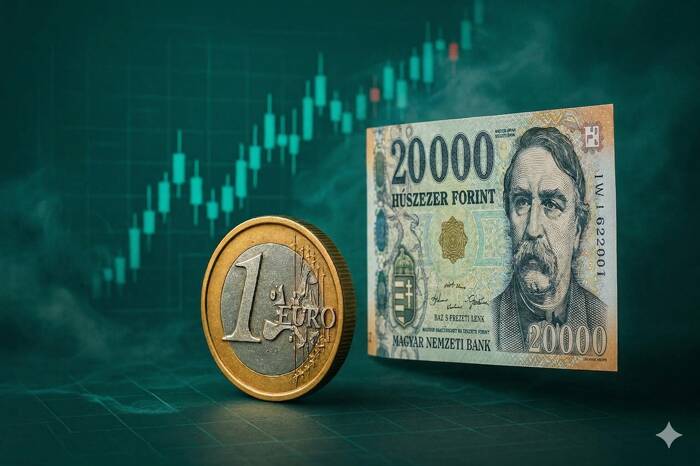
The promise of joining the euro is politically powerful but economically conditional: adopting the euro is not a switch one can flip following an election win—it is a multi-year process bound by very-strict convergence criteria. Hungary could credibly set a path toward membership, but presenting it as a near-term deliverable risks overselling what is, in reality, a disciplined and externally monitored transformation. The experience across central and eastern Europe displays that even highly motivated governments cannot shortcut the process without risking market backlash or EU pushback.
At the same time, the signal from Tisza does matter. Committing to euro adoption can act as a policy anchor, shaping investor expectations and enforcing greater fiscal and monetary discipline. In that sense, the promise is less about any fixed date and more about a general direction of travel—but voters should be clear that this is a strategic horizon, and not an immediate policy outcome.
2. What obstacles does Hungary need to overcome to achieve this?
The obstacles are both technical and political: Hungary would need to sustain moderate inflation, stabilise its currency, cut fiscal deficits and government debt, demonstrate long-term central bank independence, and convince markets to trim financing rates—all under the scrutiny of EU institutions. These are not marginal adjustments; they require sustained policy consistency over many years, often in the face of domestic political pressure and external economic shocks.
As I referenced for Handelsblatt, perhaps even more challenging is rebuilding trust with European partners. Euro adoption is as much about credibility, relationships and alignment as it is about meeting any numerical threshold. Hungary would need to demonstrate that its economic governance is predictable, its institutions are robust, and its relationship with the EU is constructive—because, ultimately, membership is a political decision that is informed by economic and institutional readiness.
3. When, at the earliest, could Hungary adopt the euro, especially given the experiences of Croatia and, in particular, Bulgaria?
