

Key Takeaways
- Senator Cynthia Lummis said she was “deeply concerned” by reports that the U.S. government sold Bitcoin.
- The sale comes after an executive order from President Donald Trump directing that forfeited Bitcoin be preserved for a Strategic Bitcoin Reserve.
- The reported sale has sparked debate, with critics questioning whether the transaction falls under the scope of the executive order.
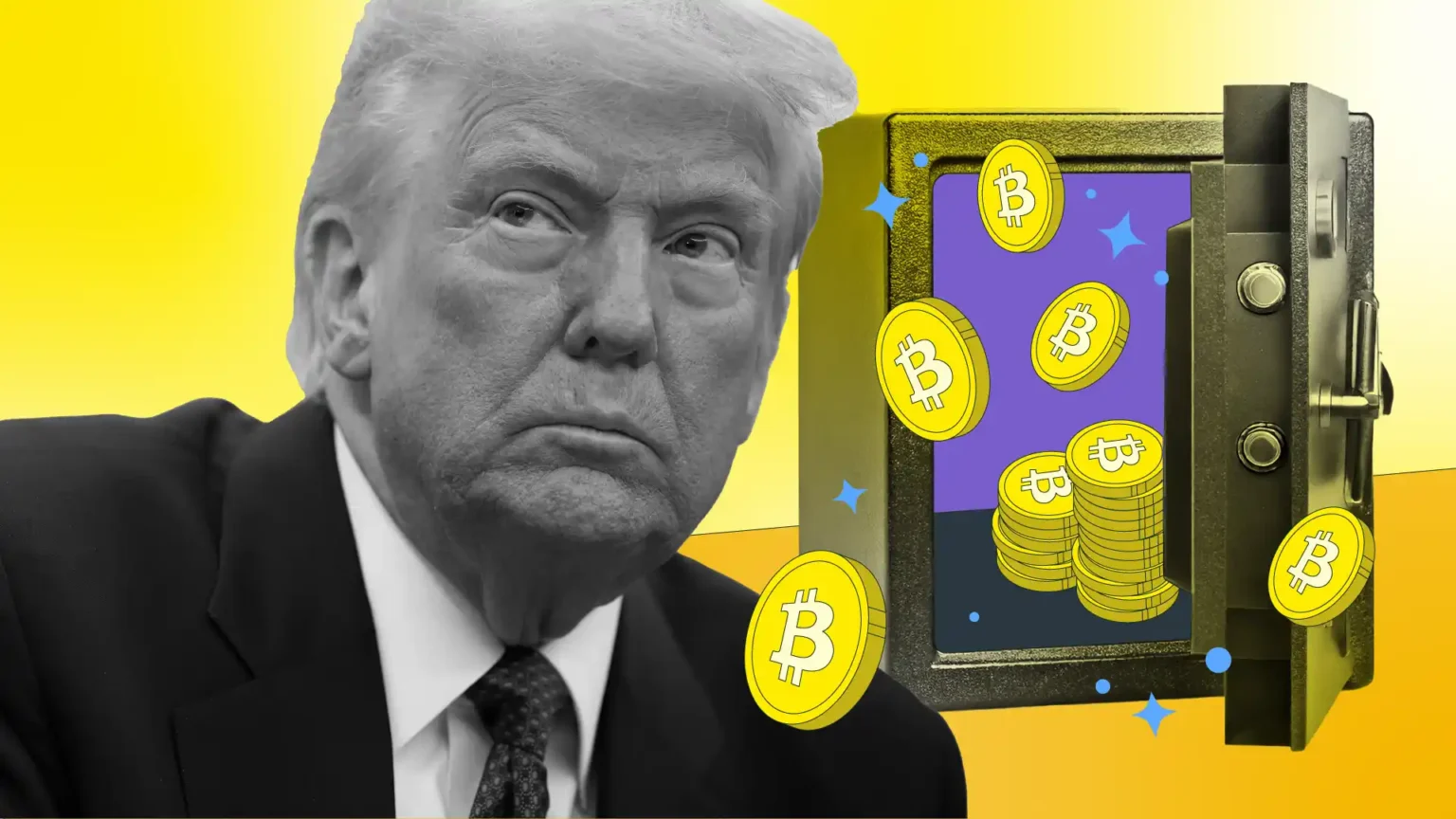
U.S. Senator Cynthia Lummis, a longtime advocate of cryptocurrencies, said she was “deeply concerned” on Tuesday by reports that the U.S. government has sold Bitcoin obtained through a criminal case, despite an executive order from President Donald Trump directing that such assets be preserved for a planned Strategic BTC Reserve.
The senator’s comments follow reporting that Bitcoin forfeited as part of a Justice Department settlement appears to have been transferred to a Coinbase Prime account and likely liquidated, raising questions about whether federal agencies are complying with the president’s directive.
Where Did the Bitcoin Go?
According to a document titled Asset Liquidation Agreement obtained exclusively by Bitcoin Magazine, defendants Keonne Rodriguez and William Lonergan Hill agreed to transfer Bitcoin worth approximately $6.37 million — equivalent to 57.5535 Bitcoin at the time — to the U.S. Marshals Service (USMS) as part of a settlement.
Samourai Wallet, which saw Rodriguez serve as CEO and Hill as CTO, was accused of laundering over $237 million between 2015 and 2024, with transactions tied to crimes ranging from fraud to murder-for-hire schemes.
The agreement was finalized on Nov. 3, 2025, when it was signed by Assistant U.S. Attorney Cecilia Vogel.
On-chain data shows the funds were sent that day from a wallet associated with the defendants directly to a Coinbase Prime address that blockchain analytics firm Arkham Intelligence attributes to the brokerage.
That Coinbase Prime address currently shows a zero balance, suggesting the Bitcoin may have already been sold.
If confirmed, the sale could conflict with Executive Order 14233, which directs that Bitcoin acquired by the U.S. government through criminal forfeiture — referred to in the order as “Government BTC” — shall not be sold and instead be transferred to the U.S. Strategic Bitcoin Reserve.
Lummis Speaks Out
Senator Lummis, a Republican from Wyoming who has repeatedly pushed for greater adoption of Bitcoin, responded to the report on social media.
“Why is the U.S. gov still liquidating Bitcoin when POTUS explicitly directed these assets [to] be preserved for our Strategic Bitcoin Reserve?” Lummis wrote.
“We can’t afford to squander these strategic assets while other nations are accumulating Bitcoin.”
She added that she was “deeply concerned about this report.”
Lummis, who leads the Senate Banking Subcommittee on Digital Assets, has long advocated for clearer regulatory frameworks for cryptocurrencies and for treating Bitcoin as a strategic national asset.
She has also spearheaded legislation aimed at reducing tax burdens on digital asset transactions and earlier this year introduced the BITCOIN Act of 2025.
What Is Trump’s Bitcoin Reserve?
President Trump signed Executive Order 14233 earlier this year, ordering federal agencies to stop selling Bitcoin obtained through seizures or forfeitures and instead contribute those holdings to a Strategic BTC Reserve (SBR).
The order frames Bitcoin as a potential strategic asset for the United States, citing its fixed supply and growing adoption by sovereign states and institutional investors.
The administration has said the reserve would allow the U.S. to maintain exposure to Bitcoin without borrowing funds to acquire it on the open market.
Not Everyone Agrees
The reported sale has drawn mixed reactions online.
Joel Griffith, a user on X, defended the decision to liquidate the Bitcoin, writing: “Better to liquidate this digital ‘asset’ at $90,000 than at potentially less than $10,000 in a few years.”
“Borrowing billions to purchase an ‘asset’ propped up by grift, hope, and marketing is fiscally imprudent,” he added.
Another X user argued that the transaction may not fall under the executive order at all, saying the Bitcoin “was used to pay a settlement” and “was not forfeited or seized as property or evidence in an investigation,” adding that the settlement required payment in U.S. dollars.
The idea of a national Bitcoin reserve in the U.S. has been a heated debate since Trump signed the order, with industry leaders divided on its effectiveness.
Despite believing in the concept, Jason Yanowitz, Co-Founder of crypto firm Blockworks, said the addition of other coins sets a “horrible precedent” and “makes no sense.”
“Without a clear framework, we risk arbitrary asset selections, which would distort the markets and drive a loss of public trust,” he said.
Meanwhile, George Selgin, a researcher at Cato Institute, wrote a report stating that a Bitcoin reserve “made no sense.”
“The list of justifications for a government Bitcoin stockpile is long, not because there are many good ones, but because there are none, so the schemes’ apologists must keep trying,” he wrote.
The Justice Department did not immediately respond to a request for comment.
