

AI has quickly moved from innovation narrative to market-moving force, particularly in wealth management, where investors are reassessing business models, margins, and competitive moats. Recent volatility in publicly traded wealth and advice platforms suggests concern that AI-native competitors could compress fees or displace traditional workflows.
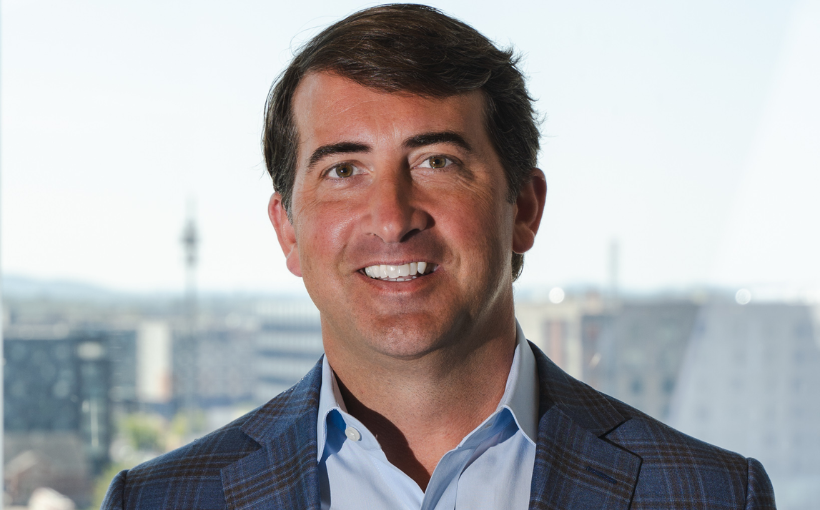
David Benskin, Founder & CEO of Wealth Access and a former Merrill Lynch advisor, built his company after firsthand experience navigating disconnected banking, brokerage, trust, and retirement systems. Benskin offers a perspective on whether AI is an existential threat, a margin enhancer, or simply the next infrastructure upgrade for wealth management.
CM: You started Wealth Access after your own experience as a Merrill Lynch advisor. What was the core problem you were trying to solve that you didn’t see addressed in the market?
DB: The moment I remember most clearly is February 2011. I was sitting in my Nashville office late at night, surrounded by boxes — records, notes from client conversations, financial plans, screenshots. I was a partner in one of Merrill’s private banking groups with about 50 families as clients, and I was trying to sort out their financial lives in the most non-digital way imaginable. So, I did what any frustrated advisor would do. Basically, I built 50 spreadsheets.
It wasn’t that Merrill didn’t have good technology — it did. But the tools that would let clients see their full financial picture across custodians, account types, and institutions simply didn’t exist. I’d ask a client how much they had in their 401(k) and they’d say $500,000. I’d ask what it was invested in and they’d say “stocks.” Not asset classes, not allocation, not fees. Just “stocks.” Their 401(k)s, brokerage accounts, debt, mortgages — all of it existed in virtually different universes. Getting it onto a spreadsheet was hard enough. Making it useful was another challenge entirely.
But the real weight of it hit me after 2008. Clients were frightened. Markets had just shaken everything they thought they knew. The question I kept hearing — from sophisticated, high-net-worth people — was simply: “Am I okay?” And I couldn’t answer that question quickly or confidently because I didn’t have a clean, unified picture of where any of them stood. That’s a failure of infrastructure, not of effort.
I looked at that and said there must be a better architecture for this. My job — every advisor’s job — is to do three things: build deep relationships with clients through real conversations about what matters to them; grow the practice; and manage existing relationships with real rigor. All three of those priorities were being diluted by roughly 50% of my time spent chasing down numbers I couldn’t fully trust.
What I needed — what every advisor needs — was one complete, accurate view of each client’s financial life. One client. One view. That’s what should have existed, and it didn’t. That’s the problem Wealth Access was built to solve. People and data, genuinely connected — so advisors can do the work that only humans can do.
CM: What does “good data” look like in a wealth enterprise, and how far are most institutions from that standard today?
DB: Good data means a single, normalized, continuously updated view of every client’s complete financial picture — across every custodian, account type, held-away asset, and system the institution touches. It means data that is clean enough to act on, not just report on. One client. One view. One source of truth that the whole institution can rely on.
Most institutions are further from that standard than they’d admit publicly. Wealth data is notoriously fragmented — it lives across dozens of custodians, multiple CRM systems, portfolio management platforms, and trust accounting software that often don’t communicate with each other. A client with a family trust, retirement accounts, a taxable brokerage, and outside real estate doesn’t naturally show up as a unified picture anywhere in most institutions’ systems.
Each data point is valid on its own — but incomplete. Getting to a connected view requires significant normalization work: extracting data from disparate sources, transforming it into consistent formats, enriching it with context, and maintaining it over time as accounts change.
The institutions doing this well have made a deliberate infrastructure investment, not just a software purchase. The institutions that haven’t yet are at increasing risk — not just of operational inefficiency, but of being unable to leverage the AI tools that are now becoming table stakes.
CM: We’ve seen wealth-management stocks sell off sharply after firms talk about AI on earnings calls. Why do you think AI references spark so much anxiety on Wall Street?
DB: Because investors have seen this movie before, and they’ve been burned. When a category of software gets disrupted, it moves fast. So, when they hear “AI” on an earnings call, a portion of the market immediately extrapolates: if AI can do this work, why does the software exist? And they sell.
I also think there’s a deeper anxiety underneath the market reaction — one I recognize from lived experience. I was at Merrill Lynch through the 2008 crash, watching clients in genuine fear because nobody could give them a clean, unified answer about where they stood. The question wasn’t sophisticated. It was just: “Am I okay?” Market volatility exposes data failure in a way that calm markets don’t. I think investors sense, even if they can’t articulate it, that the wealth management industry’s data infrastructure is more fragile than it looks — and AI is forcing that into the open.
Some of the anxiety is appropriate. The research firm Jefferies coined the term “SaaSpocalypse,” and for a specific segment of wealth management software, it’s not wrong. Platforms that built their entire value proposition around automating repetitive, rules-based workflows — the kind of work general-purpose AI can now handle at a fraction of the cost — those businesses have a real structural problem. The market is right to reprice them.
But the market isn’t distinguishing carefully enough between application-layer software, which is genuinely under pressure, and data infrastructure, which AI makes more valuable, not less. AI tools don’t create insight out of thin air — they require clean, structured, connected data to operate on. The companies that provide that foundational layer aren’t being disrupted by AI; they’re becoming more essential to it. When intelligence needs a foundation to become clarity, data infrastructure is that foundation. Wall Street will eventually sort this out. The volatility right now reflects the moment before that distinction becomes clear.
CM: Are public markets overestimating AI’s near-term disruption, or underestimating its long-term impact?
DB: Both, simultaneously — and I think that’s the honest answer even if it sounds like a dodge. In the near term, the markets are overestimating disruption in some areas and getting distracted by the noise of AI announcements. Many firms that talked loudly about AI deployment in 2025 rushed to be first to market without the data infrastructure to deliver results.
Speed of deployment alone doesn’t translate to competitive advantage. What translates to advantage is thoughtful implementation against a real data foundation — people and data genuinely connected — with a clear client outcome in mind. A lot of the near-term hype has been motion, not progress.
On the long-term side, I think the markets — and frankly most people in the industry — are underestimating how profoundly AI will reshape how advice is delivered at scale. EY’s survey of 100 leading wealth management firms found that 78% are already exploring agentic AI — systems that can proactively monitor client accounts, identify life-event triggers, and prepare personalized planning reviews without being prompted. That’s not science fiction.
The firms deploying it well right now are getting a durable head start. When I think five, ten years out, the gap between firms that can unify their data, people, and systems – what I call being able to “See as One” — and those still operating on fragmented infrastructure is going to be significant in ways that aren’t fully priced in yet.
CM: Which segments of the wealth ecosystem—custodians, RIAs, banks, broker-dealers—are most vulnerable to AI-driven disruption?
DB: The vulnerability isn’t primarily about segment — it’s about where value is derived. Any part of the ecosystem whose primary value is executing a process rather than delivering a relationship or connected data intelligence is under real pressure.
With that framing, the most exposed are the middle-tier application platforms — the workflow tools, generic reporting layers, and rules-based automation software that charged recurring fees for doing things AI can now do faster and cheaper. Those businesses have a structural problem regardless of which segment they serve.
Within specific segments: smaller RIAs without the scale to invest in data infrastructure are at risk of losing ground to larger, better-capitalized competitors who can deliver a more personalized, data-driven experience at scale. Broker-dealers in the middle market face similar dynamics. Banks and trust companies have some natural advantages — they hold more proprietary data, have deeper institutional relationships, and face higher switching costs — but only if they invest in the infrastructure to unify and use that data effectively.
The institutions that can connect their people, their data, and their systems into a single coherent view are the ones that will widen the gap. Custodians sit in an interesting position. Their core function is durable, but the value-add services they’ve built around reporting and analytics could face margin pressure as AI democratizes some of that capability. The custodians that move toward becoming genuine data infrastructure partners — rather than just asset custodians with reporting bolt-ons — are likely to strengthen their position.
CM: As a former advisor yourself, how do you respond to frontline advisors who worry that AI is coming for their jobs?
DB: I take the concern seriously, because it’s not irrational. AI is coming for a significant portion of what fills an advisor’s calendar today — and that portion is larger than most advisors want to admit. Industry research consistently shows that somewhere between a quarter and a third of advisor time goes to administrative work. That time is going to be reclaimed, one way or another.
But here’s the reframe I’d offer: that work was never what made you valuable. It was a tax on your actual job.
I know this from my own experience. At Merrill, the hours I spent manually assembling client data were hours I couldn’t spend asking a client whether their marriage was holding up, whether they were thinking about selling their business, whether their financial plan still reflected what they wanted out of their life. Those are the conversations that build trust, generate referrals, and create the kind of long-term relationships that can’t be replicated by any tool. AI doesn’t do that. AI frees you to do more of it.
The advisors I’d be concerned about are those who’ve built their practice around being the person who knows where the data is, rather than the person who knows what to do with it. That version of the job is changing. But the version built on genuine human connection — on understanding a client’s life holistically, on being a trusted guide through complex and often emotional decisions — that version becomes more valuable, not less. When data does its job, people can do theirs. That’s the whole idea.
CM: What parts of the advisor’s role do you believe are least automatable, even with very advanced AI—especially in high-net-worth and ultra-high-net-worth segments
DB: The parts that are fundamentally about human judgment operating in the context of a real relationship. At the HNW and UHNW level, the advice is almost never purely financial. It’s about family dynamics, business transition, legacy, values, and fear — and those conversations require a level of relational trust and contextual awareness that AI cannot replicate. When a client is deciding whether to sell a business they spent thirty years building, or structuring an estate plan around a complicated family situation, the technical analysis is almost the easy part. The hard part is understanding what that person wants, what they’re afraid of, and how to help them decide they can live with. That requires a human.
I’d also point to complexity navigation as irreplaceable. HNW and UHNW clients have sophisticated, multi-institution, multi-jurisdiction situations that require genuine expertise to synthesize. An AI can surface the data — and it should — but integrating that data into a coherent strategy for a specific client, in light of their specific circumstances and goals, requires an advisor who knows them deeply. People and data must be connected. The AI handles the data side. The advisor handles the human side. Neither works without the other.
What AI will do — and this is where it gets powerful — is make advisors exponentially better at both of those things. When you walk into a client meeting already holding a complete, current picture of where they stand financially — one view of one client, assembled automatically — you show up differently. The conversation starts at a different level. That’s not AI replacing the advisor. That’s AI making the advisor substantially more effective at the only work that was ever truly irreplaceable.
CM: Fast forward five years: what do you think will surprise people most about how AI changed wealth management versus what headlines predicted?
DB: I think the biggest surprise will be that AI made financial advice more human, not less. The headlines have focused almost entirely on automation and displacement — the fear that AI will hollow out the advisory relationship, reduce advice to an algorithm, and commoditize a profession built on trust. I understand why that’s the narrative. It’s the disruptive story, and disruptive stories get attention.
But here’s what I think actually happens: the advisors and institutions that embrace AI effectively spend the next five years systematically eliminating the parts of their practice that were never about the client — the data assembly, the manual reporting, the administrative backlog — and reallocating that time and attention toward deeper, more personalized, more human client relationships. When data is doing its job, people can do theirs. Clients at the high end will feel like their advisor knows them better than ever. Because their advisor will.
The second surprise will be how decisive the data infrastructure advantage turns out to be. The firms that invested in connecting their data — truly unifying it across custodians, systems, and account types — are the ones AI made dramatically more capable. Midsize financial firms were already reporting 35% average ROI on AI investments in 2025 (Citizens), but those gains accrued almost entirely to the firms with a connected data foundation underneath them. In five years, the gap between those firms and the ones still working from fragmented data will be visible in client outcomes, retention, and growth. You can’t deliver real value to customers without connected intelligence.
The third surprise — and this one I feel strongly about — is that clients will come to expect a level of proactive, personalized financial guidance that would have seemed extraordinary five years ago. Not reactive advice when they call. Not annual reviews. A continuous, living picture of where they stand and what they should be thinking about, surfaced automatically, delivered by an advisor who shows up to every conversation already knowing the whole story. The firms delivering that won’t think of it as AI-powered wealth management. They’ll just call it good service. When we see as one, intelligence becomes clarity — and clarity becomes possibility.
The post Why Wealth Stocks are Reacting to the Next Tech Wave appeared first on Connect Money.
