

Key Takeaways
- China is quietly accelerating its pullback from U.S. Treasuries, pushing state-linked banks to slash exposure amid rising volatility and geopolitical risk.
- The shift, paired with aggressive gold accumulation, adds weight to de-dollarization trends and strengthens Bitcoin’s appeal as a neutral hedge.
- Crypto markets see the move less as a short-term shock and more as a long-term tailwind in a world drifting toward multipolar finance.
China’s de-dollarization push is gaining momentum in early 2026.
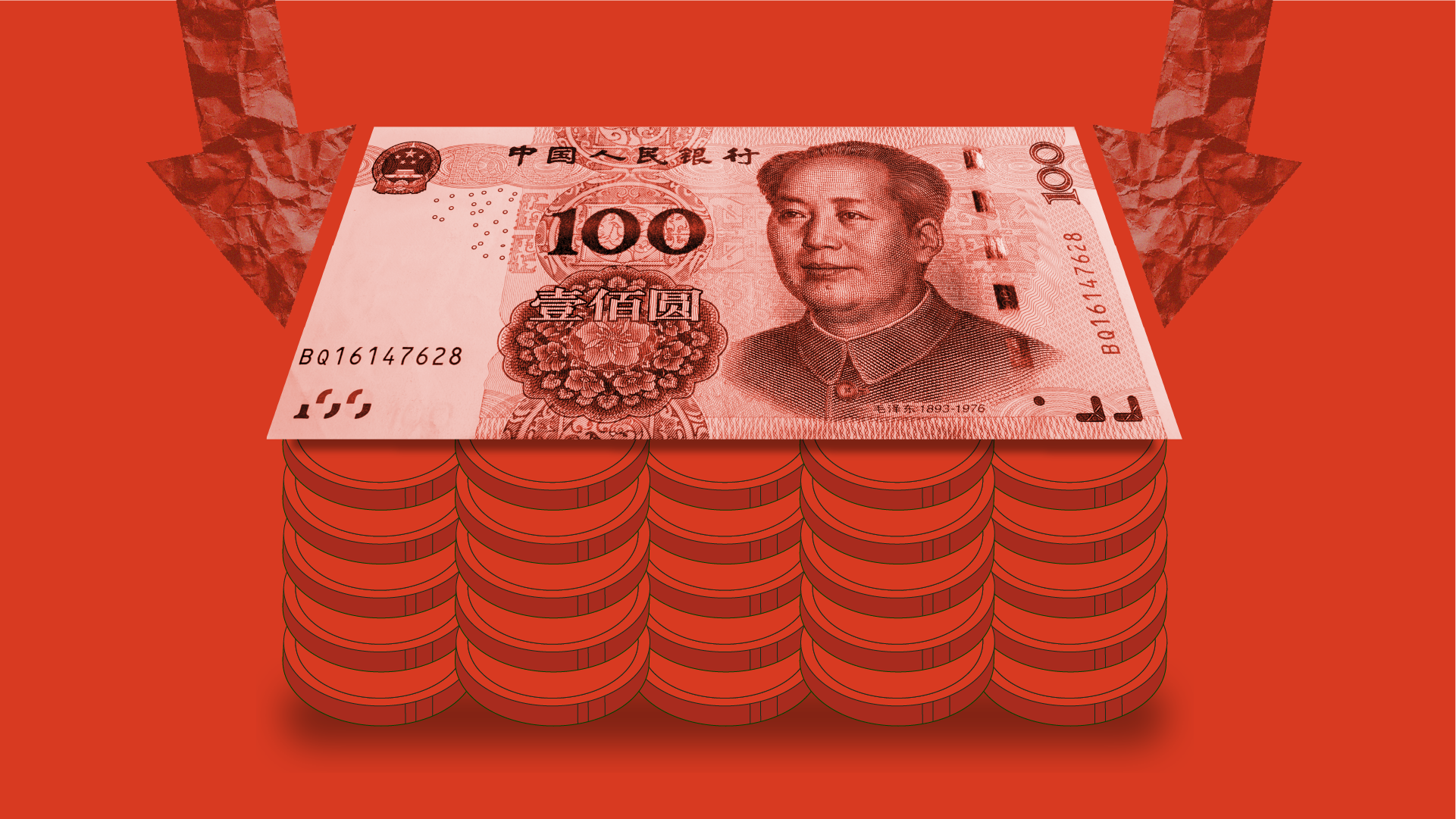
Reports of faster U.S. Treasury sales by state-linked Chinese banks, alongside a renewed pivot toward gold, the yuan (renminbi), and alternative financial systems, suggest Beijing is becoming increasingly cautious about how much of its financial future remains tied to the U.S. dollar.
The move has already rippled through global markets. U.S. Treasury prices slipped, yields climbed, and the benchmark 10-year yield rose toward the 4.24–4.25% range shortly after the news surfaced.
While China’s banks do not hold enough U.S. debt to destabilize the market on their own, the signal matters: one of America’s largest creditors is quietly stepping back.
Is this a new macro tailwind for crypto—or just another risk-off shock that drags prices lower?
China’s Long Retreat From U.S. Debt
China’s exposure to U.S. Treasuries has been shrinking for years.
As of late 2025, its official holdings fell to $682.6 billion, the lowest level since 2008.
The decline accelerated after 2017, coinciding with the U.S.–China trade war and growing concerns in Beijing about the political risks tied to dollar assets.
Those concerns intensified following the freezing of Russian dollar reserves in 2022, an episode that reshaped how governments view financial sovereignty.
For China, holding large quantities of U.S. debt increasingly looked like a strategic vulnerability rather than a stabilizing asset.
Under President Trump, tariffs on Chinese goods climbed as high as 60% in 2025, reviving fears of deeper economic and financial confrontation.
Against that backdrop, Beijing ramped up gold purchases—adding to reserves for 14 straight months and pushing holdings beyond $390 billion—while steadily reducing its reliance on U.S. Treasuries.
The latest guidance applies to commercial banks, not China’s sovereign reserves, pointing to a measured rather than panicked shift.
Still, it reinforces a broader trend: China is positioning itself for a world where dollar dominance is less absolute.
Immediate Market Reaction
From a short-term market perspective, China’s move is more likely to hurt crypto than help it.
When large holders reduce exposure to Treasuries, bond prices fall, and yields rise.
Higher yields tighten financial conditions and make lower-risk assets more attractive, pulling capital away from equities, emerging markets, and cryptocurrencies.
Crypto has historically struggled in these environments.
During periods of rising yields and tightening liquidity—such as the aggressive rate hikes of 2022—Bitcoin and Ethereum often traded like high-beta tech stocks, amplifying broader risk-off moves.
There is also a psychological component. De-dollarization headlines tend to heighten geopolitical anxiety, pushing investors toward traditional safe havens like cash and gold.
In those moments, crypto’s volatility works against it, reinforcing its reputation as a speculative asset rather than a defensive one.
If China’s Treasury cuts contribute to sustained upward pressure on yields, crypto could face near-term downside alongside other risk assets.
The Longer View: Why Crypto Bulls Are Paying Attention
Step back from daily price action, and the narrative shifts.
China’s Treasury reduction is not an isolated event.
It is part of a broader global trend toward financial fragmentation, where countries diversify away from U.S. assets, payment rails, and political influence.
Over time, that raises a fundamental question: what assets sit outside national control?
This is where crypto—particularly Bitcoin—comes into focus.
Bitcoin does not rely on any government, trade bloc, or central bank.
It cannot be sanctioned in the traditional sense, and its supply is fixed. In a multipolar financial system, those features become more relevant, not less.
If de-dollarization unfolds gradually rather than through a crisis, crypto could benefit from portfolio reallocation by investors seeking non-sovereign hedges.
Even modest shifts in institutional allocation could have outsized effects in a market still small compared to global equities or bonds.
Historically, Bitcoin has attracted interest during periods of currency stress and geopolitical uncertainty.
While it is not replacing the dollar, it increasingly competes for attention as a parallel store of value—especially when confidence in fiat systems wavers.
Stablecoins, Tokenization, and the Middle Ground
The impact of de-dollarization extends beyond Bitcoin.
Stablecoins, which underpin much of the crypto trading ecosystem, remain closely tied to U.S. Treasuries.
Estimates suggest stablecoin issuers could absorb as much as $1.6 trillion in Treasuries over the next four years, potentially preserving dollar demand through private markets even as governments pull back.
At the same time, China’s push for the digital yuan and participation in projects like mBridge highlight how blockchain-based settlement is gaining traction outside Western financial infrastructure.
Tokenized assets—ranging from bonds to equities—grew from $5.6 billion to $19 billion in 2025, signaling rising institutional interest in on-chain finance.
For crypto markets, this creates a mixed picture.
On one hand, decentralized infrastructure benefits from growing demand for alternative payment rails.
On the other, governments may respond with tighter regulation to prevent capital flight or curb reliance on dollar-pegged assets.
Bullish or Bearish? It Depends on the Timeline
So is China’s accelerated de-dollarization a macro tailwind for crypto?
In the short term, probably not. Higher yields, tighter liquidity, and risk-off sentiment tend to pressure crypto prices, and China’s Treasury cuts contribute to that environment.
Over the longer term, however, the trend strengthens crypto’s core value proposition.
As financial power fragments and reliance on a single reserve currency becomes riskier, neutral, borderless assets gain relevance.
The dollar is not disappearing. But it is no longer uncontested.
For crypto, that shift doesn’t guarantee higher prices—but it does reinforce why the asset class exists.
In a world edging toward multipolar finance, Bitcoin and other decentralized assets are no longer just speculative instruments.
They are part of the conversation about what money looks like next. That may not spark an immediate rally. But it could define the next cycle.
Analysts at firms like J.P. Morgan have previously noted that China’s post-2017 de-dollarization efforts have tended to coincide with strength in gold—and, increasingly, Bitcoin.
Kraken’s 2026 outlook also points to macro-driven Bitcoin cycles, with tokenization and blockchain-based financial infrastructure acting as secondary growth drivers.
At the same time, some analysts warn of a growing split: the U.S. leaning into dollar-backed stablecoins, while other countries tighten rules to prevent “digital dollarization.”
